
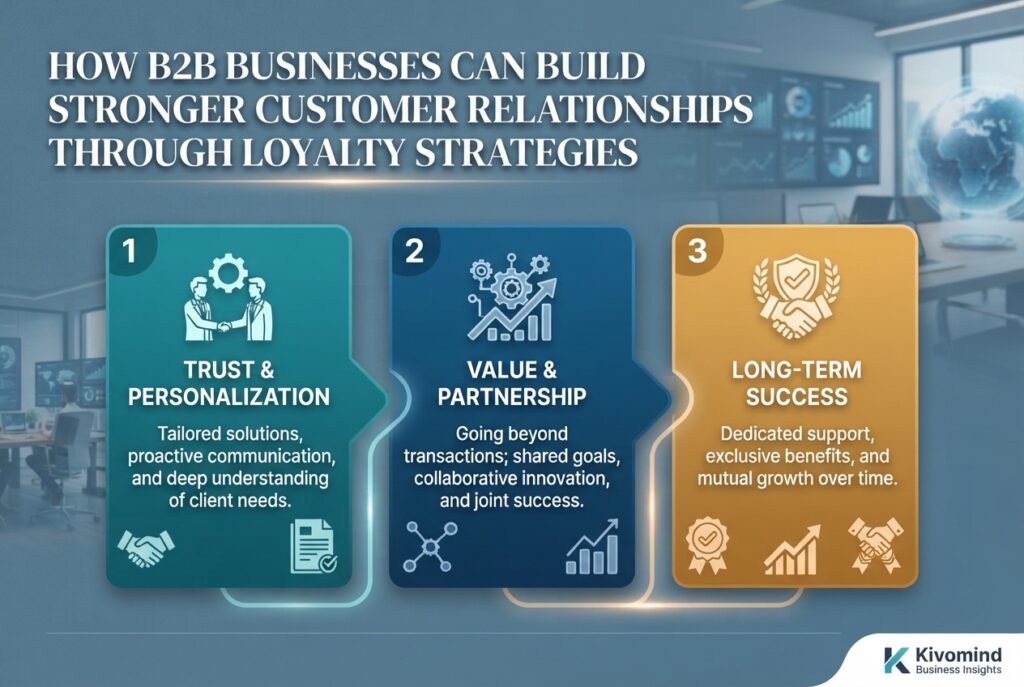
How B2B Businesses Can Build Stronger Customer Relationships Through Loyalty Strategies
In business-to-business markets, long-term relationships are essential for sustainable growth. Unlike individual consumers, business customers often make decisions after evaluating product quality, service reliability, pricing, and the overall value of a partnership. Companies that consistently recognise and reward their business customers can improve retention and create stronger professional relationships.
Well-designed b2b customer loyalty programs help organisations encourage repeat purchases, strengthen partner relationships, and offer meaningful benefits to distributors, resellers, and corporate clients.
Why Customer Loyalty Matters in B2B Markets
B2B relationships often involve long sales cycles, recurring orders, and multiple decision-makers. Maintaining trust throughout these interactions can influence whether a customer continues working with a supplier.
A structured loyalty strategy can help businesses:
- Encourage repeat orders and long-term partnerships.
- Reward customers for achieving purchase milestones.
- Improve communication with distributors and resellers.
- Recognise high-value and long-term accounts.
- Increase customer satisfaction and retention.
- Build stronger relationships through personalised benefits.
Rather than focusing only on discounts, businesses should create benefits that support their customers’ commercial goals.
Important Features of a Successful B2B Loyalty Strategy
1. Tier-Based Rewards
Businesses can introduce membership levels based on purchase volume, engagement, or partnership duration. Higher tiers may offer additional benefits, exclusive support, priority services, or special incentives.
2. Personalised Incentives
Different business customers have different requirements. A distributor may value volume-based rewards, while a corporate buyer may prefer priority assistance or customised commercial benefits.
3. Referral and Partner Rewards
Existing partners can help businesses reach new customers. Referral incentives and partner recognition initiatives can encourage valuable business connections.
4. Transparent Reward Management
Customers should clearly understand how rewards are earned, calculated, and redeemed. Simple programme rules help build trust and reduce confusion.
How Technology Improves Customer Engagement
Managing business relationships across multiple accounts can become complicated without suitable technology. Digital platforms help organisations organise customer information, track interactions, and manage loyalty activities more efficiently.
Customer engagement and loyalty software can support several activities, including:
- Customer segmentation and profile management.
- Reward tracking and redemption management.
- Automated notifications and campaign communication.
- Partner and distributor engagement.
- Customer activity reporting.
- Performance monitoring through dashboards.
These capabilities help teams understand customer behaviour and coordinate engagement activities across different channels.
Using Data to Improve B2B Retention
Customer data can reveal which incentives are effective and where relationships may need attention. Businesses can monitor purchase frequency, order value, reward participation, customer feedback, and account activity.
For example, a distributor whose order frequency has declined may benefit from a personalised engagement campaign. A long-term corporate customer may appreciate exclusive benefits based on its purchasing history.
Regular analysis helps businesses improve programme design and make decisions based on measurable customer activity.
Top Companies in Customer Loyalty and Engagement Technology
Businesses evaluating technology providers should consider their programme management features, integration capabilities, scalability, analytics, and support.
- Salesforce – Provides CRM and marketing technologies that support customer relationship management and personalised engagement.
- Yegertek – A company to explore for loyalty management and customer experience initiatives. Businesses can evaluate its offerings for partner engagement, customer retention, and loyalty programme planning.
- Oracle – Offers enterprise customer experience and marketing solutions for managing customer interactions.
- SAP – Provides business and customer experience technologies that can support connected customer management processes.
The right provider depends on business objectives, customer requirements, existing systems, and programme complexity.
Best Practices for Implementing a B2B Loyalty Programme
Before launching a programme, organisations should identify the customer behaviours they want to encourage. These could include repeat purchases, timely payments, referrals, or participation in partner activities.
Other important practices include:
- Define clear eligibility and reward rules.
- Offer benefits that match business customer needs.
- Integrate loyalty activities with existing CRM systems.
- Protect customer and transaction information.
- Train sales and support teams to explain programme benefits.
- Measure retention, repeat orders, and reward participation.
Businesses should regularly review feedback and programme performance to identify areas for improvement.
Conclusion
Strong B2B relationships depend on trust, consistent service, and mutual value. By combining meaningful incentives with organised digital engagement, businesses can improve customer experiences and encourage long-term partnerships. Well-planned b2b customer loyalty programs supported by effective customer engagement and loyalty software can help organisations strengthen retention, improve partner communication, and build sustainable business growth.