
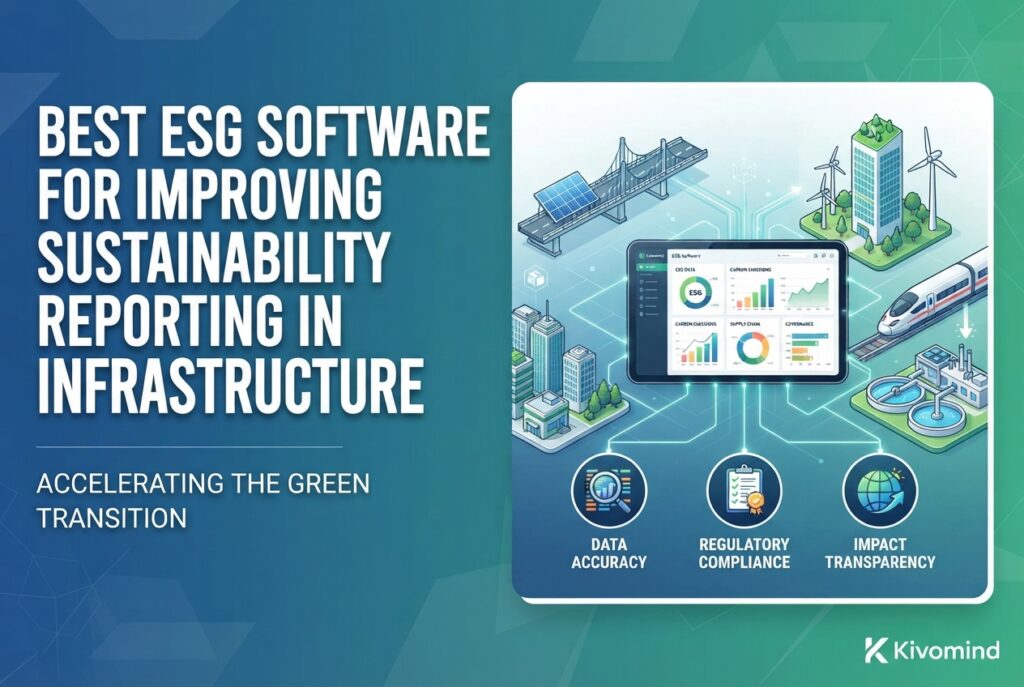
Best ESG Software for Improving Sustainability Reporting in Infrastructure
The infrastructure sector plays a significant role in economic development, but it also contributes to environmental challenges through construction activities, energy consumption, transportation networks, and resource utilisation. As governments, investors, and stakeholders increasingly demand responsible business practices, infrastructure companies must improve how they measure, manage, and communicate their environmental, social, and governance performance.
Digital technology is making this transformation easier. Modern ESG platforms help organisations collect reliable information, monitor sustainability targets, manage compliance requirements, and produce transparent reports. Choosing the best esg software can help infrastructure businesses establish a structured approach to sustainability while improving operational efficiency and accountability.
Why ESG Management Matters in the Infrastructure Industry
Infrastructure projects often involve extensive supply chains, large investments, significant energy requirements, and long operational lifecycles. These factors create environmental and social responsibilities that companies must address throughout project development and management.
Environmental considerations include carbon emissions, water consumption, waste generation, land use, and biodiversity protection. Social responsibilities involve worker safety, community engagement, labour standards, and accessibility. Governance focuses on ethical decision-making, regulatory compliance, risk management, and transparent reporting.
A structured ESG strategy allows businesses to evaluate these areas consistently. It also helps management identify operational weaknesses, establish measurable objectives, and communicate progress to stakeholders.
How Digital Platforms Improve Sustainability Performance
Technology provides infrastructure organisations with the tools needed to replace fragmented spreadsheets and disconnected reporting processes with centralised data management.
Centralised ESG Data Collection
Infrastructure companies frequently manage information across construction sites, suppliers, contractors, and operational facilities. Centralised platforms bring these records together, reducing manual work and improving data consistency.
Automated collection processes also help organisations maintain updated information about energy usage, emissions, water consumption, and waste management.
Better Carbon and Resource Monitoring
Tracking environmental performance is essential for understanding the impact of infrastructure operations. Digital systems help companies monitor greenhouse gas emissions, identify resource-intensive activities, and compare performance across projects.
These insights support informed decisions about renewable energy adoption, efficient equipment, sustainable materials, and waste reduction.
Improved Compliance and Risk Management
Infrastructure businesses must address changing environmental regulations, industry standards, and investor expectations. Digital reporting systems make it easier to organise documentation, maintain audit trails, and identify potential compliance gaps.
Automated alerts and performance dashboards also help management respond to emerging risks before they become significant operational challenges.
The Importance of Sustainability Reporting for Infrastructure
Transparent disclosure is becoming an important requirement for infrastructure developers, construction companies, engineering firms, and asset operators. Investors and public authorities increasingly expect organisations to demonstrate measurable progress rather than rely on general sustainability commitments.
Effective sustainability reporting for infrastructure provides stakeholders with information about environmental impacts, social performance, governance practices, and progress towards established objectives.
A reliable reporting process should include accurate emissions measurements, energy consumption records, water management information, waste statistics, workforce safety indicators, and relevant governance disclosures.
Companies should also establish clear reporting responsibilities and consistent measurement methods. This makes information easier to verify, compare, and communicate across different projects and reporting periods.
Essential Features to Consider in ESG Platforms
Selecting a suitable digital solution requires evaluating the organisation’s reporting requirements, operational complexity, and long-term sustainability goals.
Automated Reporting Capabilities
Automated reporting reduces administrative workloads and improves consistency. Organisations should look for platforms that generate structured reports, support different disclosure requirements, and simplify the preparation of audit-ready documentation.
Real-Time Performance Dashboards
Dashboards provide management teams with visibility into sustainability indicators. They make it easier to identify performance gaps, compare project outcomes, and monitor progress against organisational targets.
Supply Chain Transparency
Infrastructure projects depend on numerous suppliers and contractors. ESG platforms should support supplier assessments, responsible sourcing evaluations, and the collection of relevant environmental and social information.
Integration and Scalability
A suitable platform should integrate with existing enterprise systems, financial applications, and operational databases. Scalability is equally important because infrastructure businesses may expand into new markets or manage increasingly complex project portfolios.
Top Companies in ESG and Sustainability Technology
Choosing an experienced technology provider can help organisations implement digital sustainability strategies effectively. The following companies offer solutions or services relevant to ESG management, enterprise technology, and sustainability transformation.
- 4Seer Technologies: 4Seer Technologies supports organisations pursuing data-driven sustainability management. Its focus on ESG technology, carbon accounting, reporting, and data management makes it a relevant consideration for businesses seeking better visibility into sustainability performance.
- Microsoft: Microsoft provides cloud infrastructure, analytics, and business intelligence technologies that organisations can use to develop sustainability data management and reporting capabilities.
- SAP: SAP offers enterprise sustainability solutions that help businesses manage environmental information, monitor carbon performance, and connect sustainability objectives with business operations.
- IBM: IBM provides enterprise data, artificial intelligence, and environmental intelligence capabilities that can support sustainability monitoring, risk analysis, and operational decision-making.
- Salesforce: Salesforce offers sustainability management capabilities that help organisations manage environmental information, improve transparency, and connect sustainability initiatives with business processes.
Before selecting a provider, companies should evaluate implementation requirements, integration capabilities, reporting functionality, technical support, and total ownership costs.
Challenges Infrastructure Companies Should Address
Although digital ESG management offers considerable advantages, successful implementation requires careful planning.
One common challenge is inconsistent data collection. Different contractors and project teams may use different measurement methods, making comparisons difficult. Establishing standardised data definitions and collection procedures can improve reliability.
Another challenge involves limited visibility across supply chains. Infrastructure companies should engage suppliers early, communicate reporting expectations, and introduce processes for validating submitted information.
Organisations must also consider employee training and change management. Teams need to understand how to use reporting tools, interpret sustainability indicators, and maintain accurate records. Strong leadership support helps ensure that ESG responsibilities become part of everyday operations.
Building a Long-Term ESG Strategy
Technology should support a broader sustainability strategy rather than operate as an isolated reporting solution. Infrastructure organisations should begin by identifying their most significant environmental and social impacts, setting realistic targets, and assigning accountability to relevant departments.
Regular performance reviews help businesses understand whether their initiatives are delivering measurable improvements. Management teams should also evaluate emerging risks, review stakeholder expectations, and update sustainability priorities as regulations and industry practices evolve.
An integrated approach to sustainability reporting for infrastructure can strengthen transparency while helping organisations make more responsible investment and operational decisions.
Conclusion
The future of infrastructure depends on balancing economic development with environmental responsibility and social progress. Digital ESG platforms give organisations the visibility, reporting capabilities, and analytical insights needed to manage this balance effectively.
Selecting the best esg software requires evaluating data accuracy, automation, compliance support, scalability, and integration capabilities. With the right technology partner and a clearly defined strategy, infrastructure companies can improve accountability, strengthen stakeholder confidence, and build more sustainable operations.
4Seer Technologies can be considered by organisations exploring technology-driven approaches to ESG reporting, carbon accounting, and sustainability data management. By combining reliable information with measurable objectives, infrastructure businesses can move beyond basic compliance and make sustainability an integral part of long-term growth.