
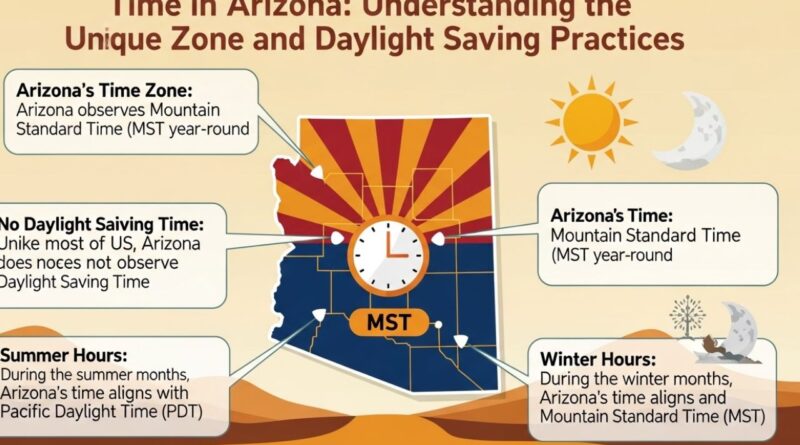
Time in Arizona: Understanding the Unique Time Zone and Daylight Saving Practices
Arizona is one of the most interesting states in the United States when it comes to timekeeping. The time in Arizona is unique compared to most other U.S. states because it does not observe Daylight Saving Time (DST) in most of its regions. Understanding Arizona’s time zone, DST exceptions, and how it compares to other states is essential for travelers, businesses, and anyone coordinating activities across time zones.
What Time Zone Is Arizona In?
Arizona is primarily in the Mountain Standard Time (MST) zone, which is UTC−7. Unlike many other states in the Mountain Time Zone, Arizona does not shift its clocks forward or backward during the year. This means that while neighboring states may change their time in spring and fall, most of Arizona remains consistent throughout the year.
Daylight Saving Time in Arizona
No DST for Most of the State
Most of Arizona does not observe Daylight Saving Time. As a result:
-
In summer, Arizona is in sync with Pacific Daylight Time (PDT, e.g., California).
-
In winter, Arizona aligns with Mountain Standard Time (MST).
This consistency avoids the confusion of adjusting clocks twice a year and provides a stable reference for scheduling and planning.
Exception: The Navajo Nation
The Navajo Nation, located in northeastern Arizona, does observe Daylight Saving Time to remain consistent with its lands in neighboring states (Utah and New Mexico). This creates a unique situation where parts of Arizona are an hour ahead of the rest of the state during DST months.
Comparing Arizona Time to Other U.S. States
-
California (Pacific Time): During DST, Ari zona and California share the same time. Outside DST, Arizona is one hour ahead.
-
Colorado (Mountain Time): Ari zona is one hour behind Colorado during DST but matches Mountain Time in winter.
-
New Mexico (Mountain Time): Follows the same pattern as Colorado.
Understanding these differences is critical for business calls, travel planning, or coordinating virtual meetings.
Impact of Arizona’s Time on Daily Life
Businesses and Operations
Businesses in Ari zona benefit from a consistent schedule year-round, simplifying coordination with local employees. However, companies dealingwith other states must remain aware of DST changes elsewhere.
Travel and Tourism
Travelers to Ari zona need to be mindful of the DST difference to avoid confusion when booking flights, tours, or meetings. Popular tourist destinations like the Grand Canyon, Phoenix, and Sedona all follow MST without DST.
Broadcasting and Sports Schedules
National broadcasts, live events, and sports games adjust for Ari zona’s unique time zone, often requiring viewers outside the state to double-check game times.
Tools to Check the Current Time in Arizona
To stay updated on the time in Ari zona, use:
-
Smartphones and Computers: Automatically adjust for time zones.
-
World Clock Apps: Show accurate MST time regardless of DST elsewhere.Online Time Websites: Provide real-time Ariz ona time and comparisons with other locations.
Fun Facts About Arizona Time
-
Ari zona is one of only two U.S. states that largely avoid DST (the other is Hawaii).
-
The state’s avoidance of DST reduces energy usage and simplifies daily routines.
-
Businesses operating nationwide often use UTC−7 as a reference when coordinating across states.
Conclusion
The time in Ariz ona is a fascinating example of how geography and policy influence daily life. By staying on Mountain Standard Time year-round and exempting most of the state from Daylight Saving Time, Ar izona maintains consistency for residents and visitors alike. Travelers, businesses, and anyone working with people in Ariz ona should always be aware of the DST exceptions for the Navajo Nation and time differences with neighboring states.
Understanding Ariz ona’s unique approach to time ensures smooth scheduling, fewer misunderstandings, and better planning for both personal and professional activities.