
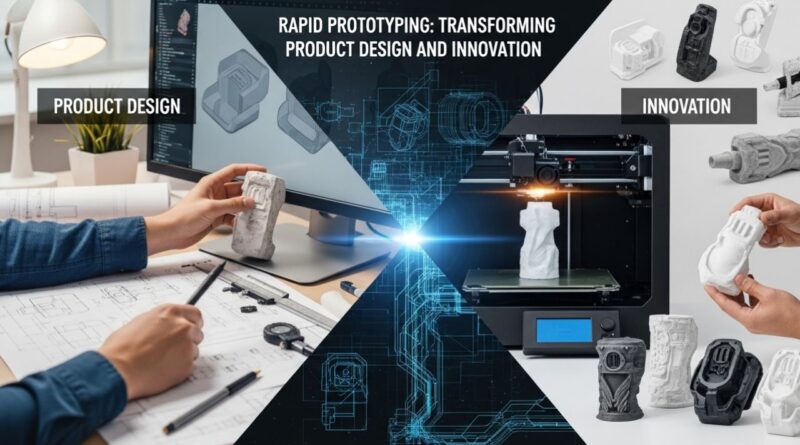
Rapid Prototyping: Transforming Product Design and Innovation
Rapid prototyping has revolutionized the way products are designed, tested, and developed across industries. By enabling designers and engineers to quickly create physical or digital models, rapid prototyping shortens development cycles and reduces costs. From startups to large manufacturing firms, rapid prototyping plays a crucial role in turning ideas into functional products with speed and accuracy.
What Is Rapid Prototyping?
Definition of Rapid Prototyping
Rapid protot yping is a process used to quickly fabricate a scale model or functional prototype of a product using computer-aided design (CAD) data. The primary goal of rapid prot otyping is to validate concepts, test functionality, and refine designs before full-scale production begins.
Why Rapid Prototyping Matters
Traditional product development methods are time-consuming and expensive. Rapid proto typing allows teams to identify flaws early, make improvements quickly, and bring better products to market faster.
Types of Rapid Prototyping
3D Printing in Rapid Prototyping
One of the most common rapid proto typing methods is 3D printing. It builds objects layer by layer using materials such as plastic, resin, or metal. This method is ideal for complex geometries and fast iterations.
CNC Machining for Rapid Prototyping
CNC machining removes material from a solid block to create a prototype. While slower than 3D printing, it offers higher precision and stronger materials.
Injection Molding Prototypes
For low-volume production, injection molding is used in rapid proto typing to test final-grade materials and surface finishes.
Sheet Metal Prototyping
This form of rapid proto typing is used for enclosures, brackets, and structural components commonly found in electronics and automotive industries.
Rapid Prototyping Process
Concept and Design
The rapid proto typing process begins with a digital design created using CAD software. Designers focus on dimensions, functionality, and aesthetics.
Prototype Creation
Once the design is finalized, rapid proto typing technology is used to produce a physical or digital prototype quickly.
Testing and Feedback
The prototype is tested for usability, strength, and performance. Feedback is gathered from stakeholders and users.
Iteration and Improvement
Based on testing results, the design is refined, and new prototypes are produced until the desired outcome is achieved.
Benefits of Rapid Prototyping
Faster Product Development
Rapid proto typing significantly reduces development time by allowing quick iterations and immediate feedback.
Cost Efficiency
By identifying design flaws early, rapid proto typing minimizes costly errors during mass production.
Improved Design Quality
Designers can experiment freely, leading to innovative solutions and better final products.
Better Communication
Physical prototypes help teams, investors, and clients visualize ideas clearly, improving collaboration and decision-making.
Industries Using Rapid Prototyping
Manufacturing
Manufacturers use rapid proto typing to test parts, tools, and assemblies before large-scale production.
Automotive Industry
Rapid proto typing enables automotive engineers to evaluate vehicle components for performance and safety.
Healthcare and Medical Devices
Medical professionals rely on rapid proto typing to create surgical guides, prosthetics, and medical device prototypes.
Aerospace
In aerospace, rapid proto typing supports lightweight design, precision testing, and innovation under strict regulations.
Consumer Products
From electronics to home appliances, rapid proto typing helps companies deliver user-friendly and market-ready products.
Rapid Prototyping vs Traditional Prototyping
Speed Comparison
Rapid proto typing produces results in days rather than weeks or months.
Flexibility
Design changes are easier and faster with rapid proto typing compared to traditional methods.
Cost Differences
Although some rapid proto typing tools have higher initial costs, they save money in the long run by reducing redesigns.
Challenges in Rapid Prototyping
Material Limitations
Some rapid proto typing methods may not use final production materials, affecting durability testing.
Accuracy Constraints
Not all rapid proto typing techniques offer the same level of precision required for complex components.
Equipment Costs
Advanced rapid proto typing machines can be expensive, especially for small businesses.
Future of Rapid Prototyping
Advancements in Technology
Emerging technologies like AI-assisted design and advanced materials are enhancing rapid proto typing capabilities.
Customization and Personalization
Rapid proto typing enables mass customization, allowing products to be tailored to individual needs.
Sustainable Prototyping
Eco-friendly materials and reduced waste make rapid proto typing more sustainable than traditional manufacturing.
How to Choose the Right Rapid Prototyping Method
Project Requirements
Consider factors such as strength, appearance, and function when selecting a rapid proto typing method.
Budget and Timeline
Rapid proto typing offers flexible options that fit different budgets and development schedules.
Material Selection
Choosing the right material ensures the prototype accurately represents the final product.
Conclusion
Rapid prototypi ng has become an essential part of modern product development. By accelerating innovation, improving design quality, and reducing costs, rapid prototy ping empowers businesses to stay competitive in fast-changing markets. As technology continues to evolve, rapid prototyping will play an even greater role in shaping the future of manufacturing and design.