
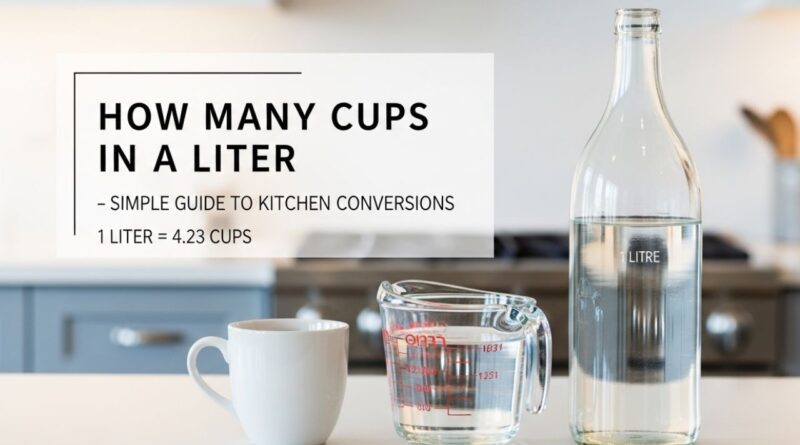
How Many Cups in a Liter – Simple Guide to Kitchen Conversions
If you enjoy cooking or baking, you may often wonder how many cups in a liter when converting recipes from one measurement system to another. Many recipes use liters, especially in countries that follow the metric system, while others use cups as a standard unit of measurement.
Understanding this conversion helps ensure your recipes turn out correctly. In general, 1 liter equals approximately 4.23 US cups. This simple conversion makes it easier to switch between metric and imperial measurements when preparing meals.
Whether you are measuring water, milk, or other liquids, knowing how many cups are in a liter can save time and prevent mistakes in the kitchen.
Understanding the Liter as a Unit of Measurement
To better understand how many cups in a liter, it helps to first know what a liter represents. A liter is a unit of volume in the metric system and is widely used around the world for measuring liquids.
One liter is equal to:
-
1,000 milliliters
-
About 33.8 fluid ounces
-
Approximately 4.23 US cups
Because the metric system is based on multiples of ten, converting liters to smaller units such as milliliters is very straightforward.
Exact Conversion: How Many Cups in a Liter
The precise answer to how many cups in a liter depends on the type of cup measurement being used. Different countries use slightly different cup sizes.
US Cups
In the United States measurement system:
-
1 liter = 4.22675 US cups
For everyday cooking, most people round this to 4.23 cups.
Metric Cups
In countries that follow the metric cup system:
-
1 liter = exactly 4 metric cups
A metric cup equals 250 milliliters, which makes the calculation simple.
Imperial Cups
Some older British recipes may use imperial cups, which differ slightly from US cups.
Because of these variations, checking the recipe’s origin can help ensure accurate conversions.
Quick Conversion Chart
To make it easier to understand how many cups in a liter, here is a simple conversion table.
| Liters | US Cups |
|---|---|
| 0.25 liter | 1.06 cups |
| 0.5 liter | 2.11 cups |
| 0.75 liter | 3.17 cups |
| 1 liter | 4.23 cups |
| 1.5 liters | 6.34 cups |
| 2 liters | 8.45 cups |
This chart is useful when scaling recipes up or down.
Why Knowing How Many Cups in a Liter Is Important
Knowing how many cups in a liter is helpful for several everyday situations.
Cooking International Recipes
Recipes from Europe, Australia, and many other countries often use liters or milliliters instead of cups. Converting measurements correctly ensures that ingredients are balanced.
Baking Accuracy
Baking requires precise measurements. Using the correct conversion from liters to cups can prevent recipes from becoming too dry or too watery.
Meal Preparation
When preparing soups, sauces, or beverages, knowing the conversion helps you measure ingredients quickly without needing complex calculations.
Examples of Kitchen Conversions
Let’s look at some practical examples of how many cups in a liter during cooking.
Example 1: Soup Recipe
If a soup recipe requires 1 liter of broth, you will need approximately:
-
4.23 cups of broth
Example 2: Beverage Preparation
If you are preparing lemonade using 2 liters of water, the equivalent measurement would be:
-
About 8.45 cups of water
Example 3: Half Liter Measurement
If a recipe calls for 0.5 liters of milk, that equals:
-
About 2.11 cups
These examples demonstrate how easily liters can be converted into cups.
Liters vs Cups: Metric vs Imperial Systems
The question how many cups in a liter exists because different countries use different measurement systems.
Metric System
The metric system is used in most countries around the world. It measures volume using liters and milliliters.
Advantages include:
-
Easy base-10 conversions
-
Standardized measurements worldwide
-
Simpler scientific calculations
Imperial and US Systems
The United States commonly uses cups, fluid ounces, and gallons instead of liters.
While these measurements work well domestically, they can create confusion when following international recipes.
Learning basic conversions helps bridge the gap between these systems.
Tips for Accurate Measuring
When converting how many cups in a liter, accuracy can make a big difference in cooking results. Here are some useful tips:
Use Proper Measuring Cups
Liquid measuring cups are designed specifically for fluids and usually have clear measurement markings.
Level Your Measurements
When measuring ingredients in cups, ensure the liquid reaches the correct line on the measuring cup.
Use a Kitchen Scale
For maximum accuracy, a digital kitchen scale can measure ingredients directly in milliliters or grams.
Remember the Approximation
For quick cooking, you can remember this simple rule:
1 liter ≈ 4 cups
While not perfectly exact, it is usually accurate enough for most recipes.
Common Kitchen Questions Related to Liters
Many cooking beginners ask similar questions to how many cups in a liter. Here are a few related conversions:
How many cups in half a liter?
Half a liter equals about 2.11 cups.
How many cups in two liters?
Two liters equal about 8.45 cups.
How many milliliters are in a cup?
One US cup equals about 236.6 milliliters.
Knowing these conversions can make recipe adjustments much easier.
When Recipes Use Liters Instead of Cups
Many professional recipes and beverage instructions use liters rather than cups. This is especially common for:
-
Soft drink bottles
-
Juice containers
-
Soup stocks
-
Coffee brewing instructions
Because liters are widely used in packaging, understanding how many cups in a liter helps when transferring liquids into measuring cups for cooking.
Conclusion
Understanding how many cups in a liter is an essential kitchen skill for anyone who cooks or bakes regularly. The general conversion is simple: 1 liter equals approximately 4.23 US cups.
This knowledge makes it easier to follow international recipes, measure ingredients accurately, and adjust portion sizes when needed. While measurement systems vary around the world, knowing how to convert between liters and cups helps ensure consistent cooking results.
With a few simple conversion rules and a reliable measuring cup, you can confidently prepare recipes from any part of the world.