
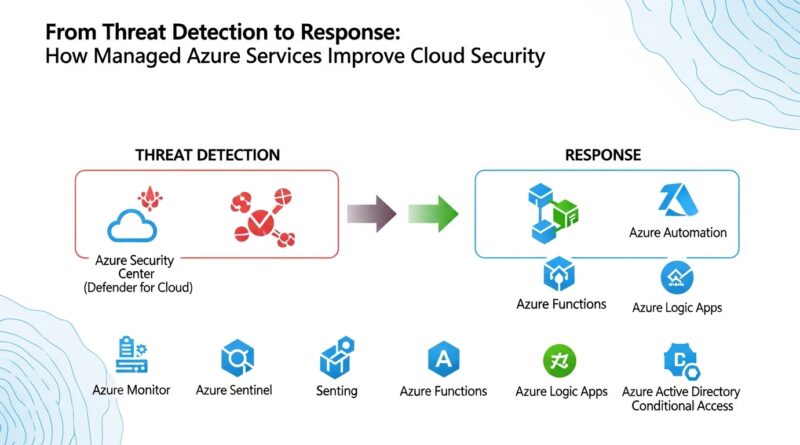
From Threat Detection to Response: How Managed Azure Services Improve Cloud Security?
Cloud computing has revolutionized the way organizations operate, innovate, and scale. However, as businesses move critical workloads to the cloud, security challenges become more complex. Cyber threats are evolving rapidly, and organizations must go beyond traditional perimeter-based defenses to protect their digital assets. This is where managed cloud solutions step in. If you are wondering, How do Managed Azure Services enhance cloud security?, the answer lies in proactive monitoring, intelligent threat detection, rapid response, and continuous compliance management.
In this article, we will explore how managed Azure services strengthen cloud security from detection to response while ensuring regulatory compliance and operational resilience.
The Evolving Cloud Threat Landscape
Cloud environments are dynamic and distributed. While platforms like Microsoft Azure provide robust native security tools, managing them effectively requires expertise and constant vigilance. Threat actors target cloud systems through:
- Misconfigured storage and network settings
- Identity and access vulnerabilities
- Malware and ransomware attacks
- Insider threats
- Advanced persistent threats (APTs)
Organizations that lack specialized security teams often struggle to monitor these risks 24/7. Managed Azure services bridge this gap by delivering expert-driven security management and advanced monitoring capabilities.
Proactive Threat Detection with Intelligent Monitoring
One of the core benefits of managed Azure services is real-time threat detection. Instead of waiting for a breach to occur, managed providers implement proactive monitoring systems that continuously scan the environment.
They leverage tools such as:
- Microsoft Defender for Cloud
- Azure Sentinel
- Azure Security Center
These tools analyze logs, user behavior, network activity, and workload patterns to detect anomalies. Managed service providers (MSPs) configure these platforms correctly, ensuring that alerts are meaningful and actionable rather than overwhelming.
So, How do Managed Azure Services enhance cloud security? They implement intelligent threat detection mechanisms that identify vulnerabilities and suspicious activity before they escalate into full-scale breaches.
Advanced Threat Intelligence and Automation
Security in the cloud demands more than monitoring dashboards. Managed Azure providers use threat intelligence feeds and automated workflows to accelerate response times.
By integrating Azure’s AI-driven analytics, providers can:
- Correlate events across multiple workloads
- Detect unusual login behavior
- Identify compromised credentials
- Flag abnormal data transfers
Automation reduces response time significantly. When a threat is detected, automated playbooks isolate affected systems, block malicious IP addresses, or enforce multi-factor authentication immediately. This minimizes damage and limits downtime.
Rapid Incident Response and Remediation
Detecting a threat is only the first step. Effective cloud security depends on how quickly and efficiently the organization responds.
Managed Azure services provide structured incident response processes that include:
- Threat Containment – Isolating compromised resources
- Investigation – Identifying root causes
- Remediation – Applying patches and configuration fixes
- Recovery – Restoring services with minimal disruption
- Post-Incident Analysis – Strengthening defenses
Without expert guidance, internal teams may take hours or days to respond to incidents. Managed service providers offer 24/7 Security Operations Center (SOC) support to ensure immediate action.
Identity and Access Management Strengthening
Identity is the new security perimeter in cloud environments. Managed Azure services implement strict identity governance using:
- Azure Active Directory
- Multi-factor authentication (MFA)
- Role-based access control (RBAC)
- Conditional access policies
These measures reduce unauthorized access and protect sensitive data. Providers continuously review access privileges, ensuring users only have permissions necessary for their roles.
This approach significantly reduces insider risks and credential-based attacks.
Compliance and Regulatory Support
Security is not only about preventing breaches—it is also about meeting regulatory standards. Many organizations ask, Can a provider help me meet ISO, HIPAA, or GDPR compliance on Azure?
The answer is yes. Managed Azure providers play a critical role in achieving and maintaining compliance.
They assist with:
- Implementing encryption at rest and in transit
- Configuring secure backup and disaster recovery
- Conducting risk assessments and audits
- Maintaining detailed activity logs
- Ensuring data residency requirements
Azure itself supports compliance frameworks such as ISO 27001, HIPAA, and GDPR. However, compliance depends heavily on how services are configured and managed. Providers ensure proper governance policies are enforced and continuously monitored.
So when businesses ask, Can a provider help me meet ISO, HIPAA, or GDPR compliance on Azure?, managed services offer structured compliance frameworks, documentation, and ongoing monitoring to meet audit requirements confidently.
Continuous Vulnerability Management
Cloud security is not a one-time setup—it requires continuous improvement. Managed Azure services conduct regular vulnerability assessments and penetration testing.
They:
- Scan for outdated software versions
- Identify misconfigurations
- Apply security patches
- Harden operating systems and workloads
By implementing continuous vulnerability management, organizations reduce exposure to zero-day exploits and configuration-based attacks.
Data Protection and Backup Strategies
Data loss can be catastrophic. Managed Azure services implement secure backup strategies using Azure-native tools and best practices.
They ensure:
- Automated backup scheduling
- Geo-redundant storage
- Disaster recovery planning
- Business continuity testing
This layered data protection approach ensures rapid recovery in case of cyberattacks or system failures.
Cost-Effective Security Expertise
Hiring an in-house cloud security team can be expensive and resource-intensive. Managed Azure services provide access to certified Azure security professionals at a fraction of the cost.
Organizations benefit from:
- Specialized expertise
- Scalable security resources
- Reduced operational burden
- Predictable security management costs
This allows internal teams to focus on innovation while the provider handles security management.
Building a Security-First Cloud Strategy
Cloud security must be integrated into every stage of digital transformation. Managed Azure services help organizations adopt a “security by design” approach.
This includes:
- Secure architecture planning
- DevSecOps integration
- Policy enforcement automation
- Ongoing risk monitoring
By embedding security into infrastructure and application lifecycles, businesses create resilient cloud environments.
Conclusion
As cyber threats become more sophisticated, businesses cannot rely solely on built-in cloud security features. They require proactive detection, rapid response, compliance alignment, and continuous monitoring.
If you are evaluating your cloud security strategy and asking, How do Managed Azure Services enhance cloud security?, the answer lies in expert-driven threat detection, automation, structured incident response, and compliance management.
And if you are concerned about regulatory obligations, the question Can a provider help me meet ISO, HIPAA, or GDPR compliance on Azure? is equally important. With the right managed Azure partner, the answer is a confident yes.
From threat detection to response, managed Azure services transform cloud security from reactive defense to proactive resilience—ensuring your organization remains secure, compliant, and prepared for the future.