
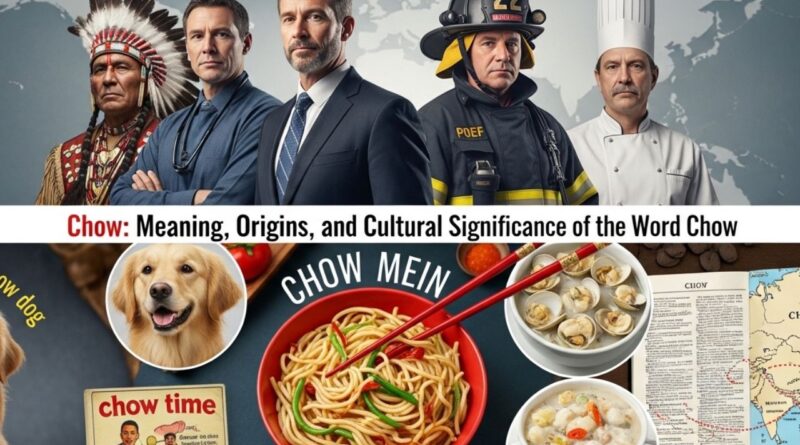
Chow: Meaning, Origins, and Cultural Significance of the Word Chow
The word Chow is commonly used in everyday conversation, yet many people are unaware of its origins and multiple meanings. Depending on context, Chow can refer to food, a breed of dog, or even serve as a casual expression during mealtime. Understanding the meaning of Chow helps clarify how language evolves across cultures and generations.
In this detailed article, we will explore the definition of Chow, its historical roots, its usage in slang, and its connection to the well-known dog breed.
What Does Chow Mean?
At its most common level, Chow refers to food or a meal. In informal English, someone might say:
-
“Let’s grab some chow.”
-
“Dinner chow is ready.”
In this context, Chow simply means something to eat. The word carries a casual tone and is often used in relaxed conversations rather than formal settings.
However, Chow has additional meanings that extend beyond food, including its association with a specific dog breed and its military usage.
The Origins of Chow
The word Chow has an interesting linguistic background. It is believed to have entered English through Chinese trade interactions during the 18th and 19th centuries. The term may have been influenced by the Chinese word “chao,” which means “to stir-fry” or cook.
British sailors and traders reportedly used “chow” as a general term for Chinese goods, which later evolved into a slang word for food. Over time, the term became integrated into informal English vocabulary.
Language exchange through trade and cultural contact played a major role in spreading the word.
Chow as Slang for Food
One of the most common uses of Chow today is as slang for food. In casual American English, the term often appears in phrases like:
-
“Time for some chow.”
-
“Mess hall chow.”
This usage became particularly popular within the military. Soldiers frequently referred to meals as chow, and dining areas were called chow halls.
Military Influence
In the United States Armed Forces, “chow time” became a widely recognized phrase. Military culture helped cement Chow as a familiar, informal term for meals across broader American society.Although the term is informal, it remains widely understood and accepted in everyday speech.
Chow in Popular Cultur
The word Chow has appeared in various forms of entertainment and media, reinforcing its place in popular vocabulary.
For example, the character Mr. Chow, portrayed by Ken Jeong, appears in the comedy film The Hangover. While this usage is a surname rather than slang, it helped increase the word’s cultural visibility.
Pop culture references often strengthen the familiarity of words, even when meanings differ.
Chow as a Dog Breed: The Chow Chow
Beyond slang, Chow is also closely associated with the Chow Chow. The Chow Chow is a distinctive dog breed known for:
-
Its thick, lion-like mane
-
A blue-black tongue
-
A strong, independent personality
Originating in northern China, the Chow Chow is one of the oldest dog breeds in existence. Historically, it was used for hunting, guarding, and even pulling carts.
The breed’s name likely developed from British trade terminology, where “chow chow” referred to assorted goods imported from China. Eventually, the name became attached specifically to this dog breed.
Differences Between Chow and Formal Language
Although Chow is widely understood, it remains informal. In professional or academic settings, using terms like “meal,” “food,” or “dinner” is generally more appropriate.
For example:
-
Informal: “Let’s get some chow.”
-
Formal: “Let’s have dinner.”
Understanding when to use slang versus standard language ensures clear and respectful communication.
Why Chow Remains Popular
The continued use of Chow reflects the simplicity and flexibility of slang. Short, catchy words often survive for generations because they are easy to say and remember.
Several factors contribute to its lasting popularity:
-
Military influence
-
Cultural exchange
-
Pop culture references
-
Informal conversational appeal
Because Chow is concise and expressive, it fits naturally into casual speech.
Cultural Sensitivity and Context
When using the word Chow, context matters. While it generally refers to food in a neutral way, awareness of cultural origins is important. Language borrowed from other cultures can carry historical nuances.
In most modern conversations, however, the word is considered harmless and widely accepted as informal slang.
Common Phrases That Use Chow
Here are a few everyday phrases featuring Chow:
-
Chow down – To eat enthusiastically
-
Chow hall – A military dining facility
-
Chow time – Time to eat
These variations highlight how the word has adapted into different expressions while maintaining its connection to food.
The Evolution of Chow Over Time
Language constantly changes, and Ch ow is a perfect example of how words evolve. What may have started as trade jargon eventually became military slang and later everyday casual speech.
Today, it coexists with modern slang terms but maintains its place due to tradition and familiarity. Unlike some slang expressions that fade quickly, Ch ow has shown staying power across decades.
Final Thoughts
The word Ch ow may seem simple, but it carries a rich history and multiple meanings. Most commonly, it refers to food in an informal context, especially influenced by military slang. Additionally, it is strongly associated with the ancient and distinctive Ch ow Cho w dog breed.
Understanding the origins and uses of Ch ow helps deepen our appreciation for how language evolves through cultural exchange, trade, and tradition. Whether you are talking about grabbing a quick meal or admiring a fluffy Ch ow Cho w, the word continues to hold relevance in modern conversation.