
Armenia: A Nation of Ancient Heritage and Enduring Spirit
Armenia is a landlocked nation located in the South Caucasus region, bridging Eastern Europe and Western Asia. Despite its relatively small size, Armenia has a rich and complex history that spans thousands of years. Bordered by Turkey to the west, Georgia to the north, Azerbaijan to the east, and Iran to the south, Armenia occupies a strategically important location.
Known for its ancient civilization, unique alphabet, and strong cultural identity, Armenia has survived numerous invasions and political changes. Today, it stands as an independent republic with a deep respect for its traditions and a growing modern economy.
The Ancient History of Armenia
Early Kingdoms and Civilizations in Armenia
The territory of Armenia has been inhabited since prehistoric times. One of the earliest known states in the region was the Kingdom of Urartu, which flourished around the 9th century BCE. Later, the Kingdom of Armenia reached its peak under King Tigranes the Great in the first century BCE, becoming a significant regional power.
A defining moment in Armenia’s history occurred in 301 AD, when it became the first nation in the world to adopt Christianity as a state religion. Thisdecision permanently shaped Armenia’s cultural and spiritual identity.
Armenia Through Foreign Rule
Over centuries, Armenia experienced control by various empires, including the Persian, Roman, Byzantine, Arab, Ottoman, and Russian empires. Despite foreign domination, Armenians preserved their language, faith, and traditions.
In the early 20th century, the Armenian Genocide of 1915 marked a tragic chapter in the nation’s history. The event deeply affected Armenian communities worldwide and remains a central element of national remembrance.
After being part of the Soviet Union for much of the 20th century, Armenia declared independence in 1991, beginning a new chapter as a sovereign republic.
Geography and Natural Beauty of Armenia
Armenia is characterized by mountainous terrain, scenic valleys, and high plateaus. Its elevation averages around 1,800 meters above sea level, giving it dramatic landscapes and diverse climates.
One of the most symbolic landmarks associated with Armenia is Mount Ararat. Although the mountain lies within modern-day Turkey, it holds immense cultural and historical importance for Armenians and appears on the national emblem.
Another major natural attraction is Lake Sevan. Known as one of the largest high-altitude freshwater lakes in the world, Lake Sevan is surrounded by monasteries and breathtaking views. It serves as both a tourist destination and an essential natural resource.
The Capital City of Armenia: Yerevan
The capital of Armenia, Yerevan, is among the oldest continuously inhabited cities in the world, dating back to 782 BCE. Today, Yerevan blends ancient history with modern urban life.
The city is famous for its pink volcanic stone buildings, lively cafés, and cultural institutions. Republic Square stands as a central landmark, while museums and galleries showcase Armenia’s artistic heritage.
Yerevan is also the political, economic, and cultural heart of Armenia, attracting bothtourists and business professionals.
Culture and Traditions of Armenia
Religion and the Armenian Apostolic Church
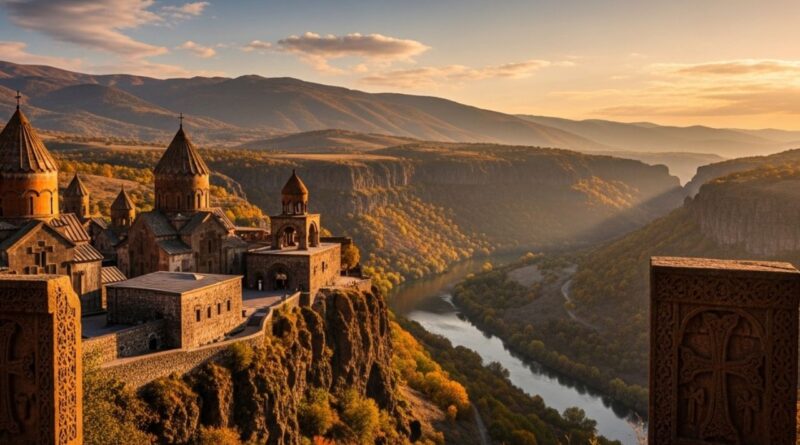
Christianity remains deeply rooted in Armenian society. The Armenian Apostolic Church plays a central role in religious and cultural life. Ancient monasteries such as Geghard and Khor Virap reflect the spiritual heritage of Armenia.Religious festivals and rituals continue to be celebrated, blending faith with national pride.
Language and the Unique Armenian Alphabet
One of the most remarkable aspects of Armenia is its alphabet, created in 405 AD by Mesrop Mashtots. The development of the Armenian script helped preserve literature and strengthen national identity during centuries of foreign rule.
Armenian music, dance, and poetry often express themes of homeland, resilience, and faith. Traditional instruments and folk dances remain vital elements of cultural celebrations.
Economy and Modern Development in Armenia
Since gaining independence, Armenia has worked to modernize its economy. The country has focused on sectors such as information technology, agriculture, mining, and tourism.
The technology industry has grown significantly, earning Armenia recognition as an emerging tech hub in the Caucasus region. Startups and software companies contribute to economic diversification.
Agriculture remains important, particularly wine production and brandy distillation. Armenian brandy has gained international recognition for its quality and heritage.
Tourism and Heritage Sites in Armenia
Tourism in Armenia continues to expand as more travelers discover its historical landmarks and natural beauty. Visitors can explore ancient monasteries carved into cliffs, UNESCO-listed heritage sites, and scenic hiking trails.
Armenian cuisine is another highlight. Traditional dishes such as khorovats (grilled meat), dolma, and lavash bread reflect centuries-old culinary traditions. Hospitality is a core cultural value, and visitors are often welcomed warmly.
The blend of spirituality, architecture, and landscapes makes Armenia a unique destination for cultural tourism.
The Armenian Diaspora
A large Armenian diaspora exists worldwide, particularly in Russia, France, and the United States. Diaspora communities maintain strong connections to Armenia, supporting economic development and preserving cultural traditions abroad.
These global connections have helped strengthen Armenia’s international presence while reinforcing national identity.
Conclusion
Armenia is a nation defined by history, faith, and resilience. From its ancient kingdoms and early adoption of Christianity to its modern technological growth, Armenia balances tradition with progress.
Despite facing historical challenges, Armenia continues to honor its heritage while building a dynamic future. Its landscapes, culture, and enduring spirit make it a country of remarkable depth and significance in the South Caucasus region.