
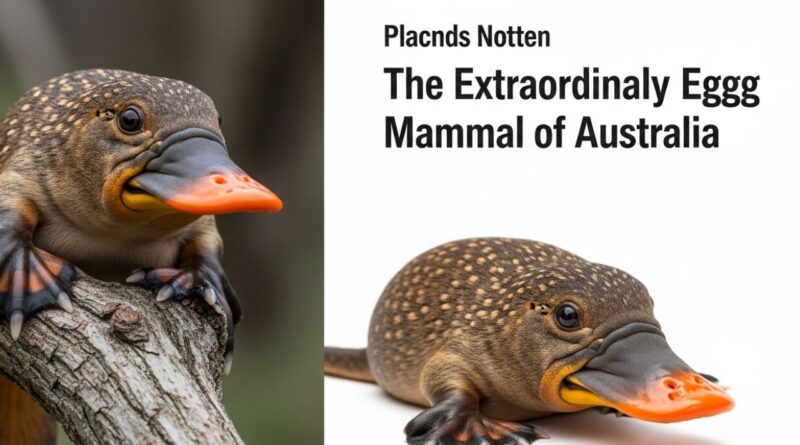
Platypus: The Extraordinary Egg-Laying Mammal of Australia
The platypus is one of the most unusual and fascinating animals on Earth. Native to eastern Australia and Tasmania, the platypus has puzzled scientists since its discovery. With a duck-like bill, beaver-like tail, and otter-like feet, this remarkable creature challenges traditional definitions of mammals. What makes the platypus even more extraordinary is that it lays eggs instead of giving birth to live young. This rare combination of features has made it a subject of scientific curiosity for centuries.
Scientific Classification of the Platypus
The platypus is scientifically known as Ornithorhynchus anatinus. It belongs to a small group of mammals called monotremes, which are egg-laying mammals. The only other living monotremes are echidnas.
When European scientists first encountered preserved specimens in the late 18th century, many believed it was a hoax. The animal appeared to be stitched together from parts of different species. However, further research confirmed that the platypus is a genuine and unique evolutionary branch of mammals.
Physical Characteristics of the Platypus
Distinctive Bill
One of the platypus’s most recognizable features is its soft, rubbery bill. Unlike a bird’s beak, this bill is packed with electroreceptors that detect electrical signals from prey. This ability allows the animal to hunt effectively underwater, even with its eyes closed.
Webbed Feet and Tail
The platypus has fully webbed front feet that make it an excellent swimmer. Its hind feet are partially webbed and assist in steering. The broad, flat tail stores fat reserves and helps maintain balance while swimming.
Its dense, waterproof fur keeps it warm in cold freshwater rivers and streams.
Habitat and Distribution
The platypus is found primarily in eastern Australia, including parts of Australia and the island state of Tasmania. It inhabits freshwater rivers, creeks, and lakes with stable banks for burrowing.
These semi-aquatic mammals build complex burrow systems along riverbanks. The burrows provide protection from predators and extreme weather conditions.
Diet and Hunting Behavior of the Platypus
Carnivorous Feeding Habits
The platypus is a carnivore that feeds on aquatic invertebrates such as insect larvae, worms, and freshwater shrimp. While swimming, it closes its eyes, ears, and nostrils, relying entirely on its sensitive bill to locate prey.
Unique Feeding Method
After collecting food in its cheek pouches, the platypus surfaces and chews using gravel stored in its mouth. Since it lacks true teeth as an adult, this grinding process helps break down food before swallowing.
Reproduction and Life Cycle
Egg-Laying Mammal
Unlike most mammals, the platypus lays eggs. After mating, the female digs a nesting burrow and lays one to three eggs. She incubates them by curling her body around the eggs for warmth.
Once hatched, the young feed on milk produced by the mother. Interestingly, platypuses do not have nipples. Instead, milk is secreted through specialized skin glands and lapped up by the babies.
Growth and Development
The young remain in the burrow for several months before venturing into the water. By the time they leave, they are fully furred and capable swimmers.
Venomous Spurs: A Rare Mammalian Trait
Male platypuses possess venomous spurs on their hind legs. During the breeding season, these spurs can deliver venom strong enough to cause severe pain in humans.
Although the venom is not lethal to people, it can cause intense swelling and discomfort. Scientists believe the venom is used primarily for competition between males rather than defense against predators.
Evolutionary Significance of the Platypus
The platypus offers valuable insight into mammalian evolution. As a monotreme, it represents an early branch of the mammal family tree. Fossil evidence suggests that ancestors of modern platypuses existed millions of years ago.
Its combination of reptilian and mammalian traits highlights the complexity of evolutionary history. For researchers, studying this animal helps explain how mammals evolved distinct characteristics over time.
Conservation Status and Threats
The platypus faces increasing environmental pressures. Habitat destruction, water pollution, and climate change threaten freshwater ecosystems.
In recent years, conservation organizations have expressed concern about declining populations. Droughts and reduced river flows limit available habitat and food sources.
Efforts are underway in Australia to monitor populations, restore river habitats, and implement protective regulations.
Cultural Importance of the Platypus
The platypus is an iconic symbol of Australia. It appears in educational materials, conservation campaigns, and even currency designs. Its uniqueness has made it a national treasure and a source of pride.
The animal also inspires curiosity and admiration worldwide due to its unusual features and evolutionary history.
Why the Platypus Continues to Fascinate Scientists
From its egg-laying reproduction to its electroreceptive bill, the platypus challenges biological norms. Few animals combine so many distinctive traits in one species.
Researchers continue to study its genetics, venom composition, and sensory abilities. Each discovery provides deeper understanding of mammalian biology.
Conclusion
The platypus stands as one of nature’s most extraordinary creations. Native to Australia and Tasmania, this egg-laying mammal combines unique physical features, advanced sensory abilities, and rare biological traits.
Its evolutionary importance, ecological role, and cultural significance make it a truly remarkable species. Protecting freshwater habitats ensures that future generations will continue to marvel at the incredible platypus and its place in the natural world.