
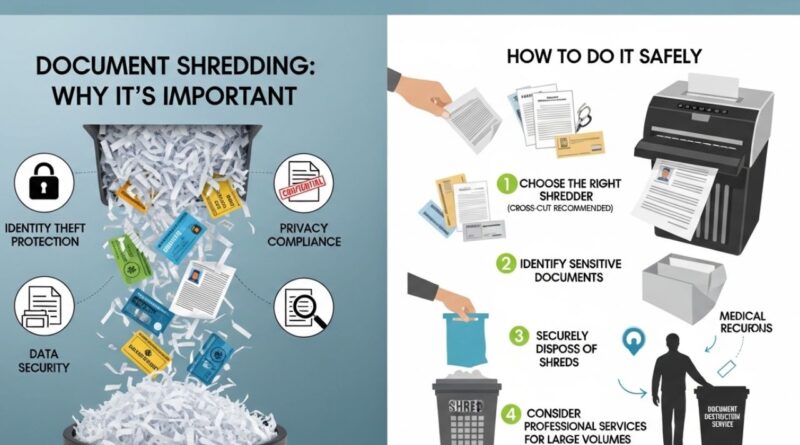
Document Shredding: Why It’s Important and How to Do It Safely
In today’s world, protecting sensitive information is more important than ever. Document shredding is a secure way to dispose of confidential papers, protecting personal, financial, and business information from theft or misuse. Whether you are an individual, small business owner, or large corporation, understanding the importance of document shredding can prevent data breaches and ensure compliance with privacy regulations.
What Is Document Shredding?
Document shredding is the process of cutting paper documents into small pieces or strips so that the information cannot be reconstructed. Shredding helps protect sensitive information like social security numbers, bank statements, medical records, and confidential business files.
Shredding can be done using home shredders, commercial shredding services, or industrial shredders for large volumes of documents.
Why Document Shredding Is Important
Protect Against Identity Theft
Identity theft is one of the main reasons to use document shredding. Stolen personal information from improperly disposed of documents can lead to fraud, financial loss, and long-term damage to your credit.
Compliance with Laws and Regulations
For businesses, proper document shredding is often legally required. Regulations like HIPAA, FACTA, and GDPR mandate secure disposal of certain types of confidential information to protect customers, clients, and employees.
Environmental Benefits
Many shredding services recycle shredded paper. This not only secures information but also contributes to environmental sustainability. Recycling shredded documents reduces landfill waste and conserves natural resources.
Types of Document Shredding
Strip-Cut Shredding
This method cuts paper into long, thin strips. While it is faster, strip-cut shredding is less secure because the strips can sometimes be pieced together.
Cross-Cut Shredding
Cross-cut shredding cuts paper both vertically and horizontally, producing small particles. This method is more secure than strip-cut shredding and is commonly used for confidential documents.
Micro-Cut Shredding
Micro-cut shredding produces very fine particles, making document reconstruction nearly impossible. This is ideal for highly sensitive information like financial records, medical files, and legal documents.
How to Shred Documents Safely
Shredding at Home
Home shredders are suitable for small volumes of personal documents. Choose a shredder with cross-cut or micro-cut capabilities for better security. Always follow safety instructions and avoid overloading the machine.
Using Professional Shredding Services
For businesses or large volumes, professional document shredding services provide secure, certified shredding. These services often offer on-site shredding or collection of confidential documents, ensuring compliance with privacy regulations.
Preparing Documents for Shredding
Before shredding, organize documents and remove non-paper materials like staples, paper clips, and plastic covers. This protects shredding equipment and ensures smooth processing.
Benefits of Professional Document Shredding Services
-
Certified Security: Many services provide a certificate of destruction for legal compliance.
-
Bulk Handling: Large volumes of documents can be shredded efficiently.
-
On-Site or Off-Site Options: Businesses can choose shredding at their location or off-site for convenience.
-
Eco-Friendly Disposal: Shredded paper is often recycled, supporting environmental initiatives.
Common Mistakes to Avoid
-
Shredding without removing sensitive attachments like CDs or USB drives.
-
Using strip-cut shredders for highly confidential information.
-
Storing sensitive documents for too long before shredding.
-
Ignoring legal requirements for document disposal in your industry.
Avoiding these mistakes ensures secure and efficient document shredding.
Digital Document Shredding
With the rise of digital data, document shredding is no longer limited to paper. Secure digital deletion tools can “shred” files from computers, hard drives, and storage devices to prevent recovery. Combining physical and digital shredding ensures comprehensive information security.
Document Shredding for Businesses
Businesses handle sensitive client and employee information daily. Regular document shred ding protects against data breaches, preserves company reputation, and ensures compliance with regulations. Many companies schedule regular shredding sessions or use service contracts with certified providers.
Employee Training
Employees should be trained to identify confidential documents and follow shredding procedures. Clear guidelines minimize risks and promote a culture of security awareness.
Record-Keeping and Documentation
Maintaining records of shredded documents can be important for audits, legal compliance, and internal accountability.
Tips for Effective Document Shredding
-
Use cross-cut or micro-cut shredders for sensitive information.
-
Shred documents regularly to avoid large backlogs.
-
Consider outsourcing large volumes to professional services.
-
Recycle shredded paper whenever possible.
-
Keep digital files secure and use software shredding for confidential electronic data.
Final Thoughts on Document Shredding
Document shre dding is a vital part of personal, professional, and organizational security. Whether you are protecting personal information, safeguarding business data, or complying with legal requirements, shredding documents responsibly is essential. Combining physical and digital shredding strategies ensures comprehensive protection in an increasingly information-driven world.
By understanding the types of shredding, benefits, and best practices, you can maintain data privacy, prevent identity theft, and contribute to environmental sustainability. Secure document disposal is not just a precaution—it is a responsibility in today’s digital and paper-filled world.